
TEECOM’s Dain Devlin Named to Inavate EMEA 40 Under 40 Class of 2026
TEECOM's Dain Devlin joins the Inavate EMEA 40 Under 40 Class of 2026, recognizing emerging talent shaping the future of AV...
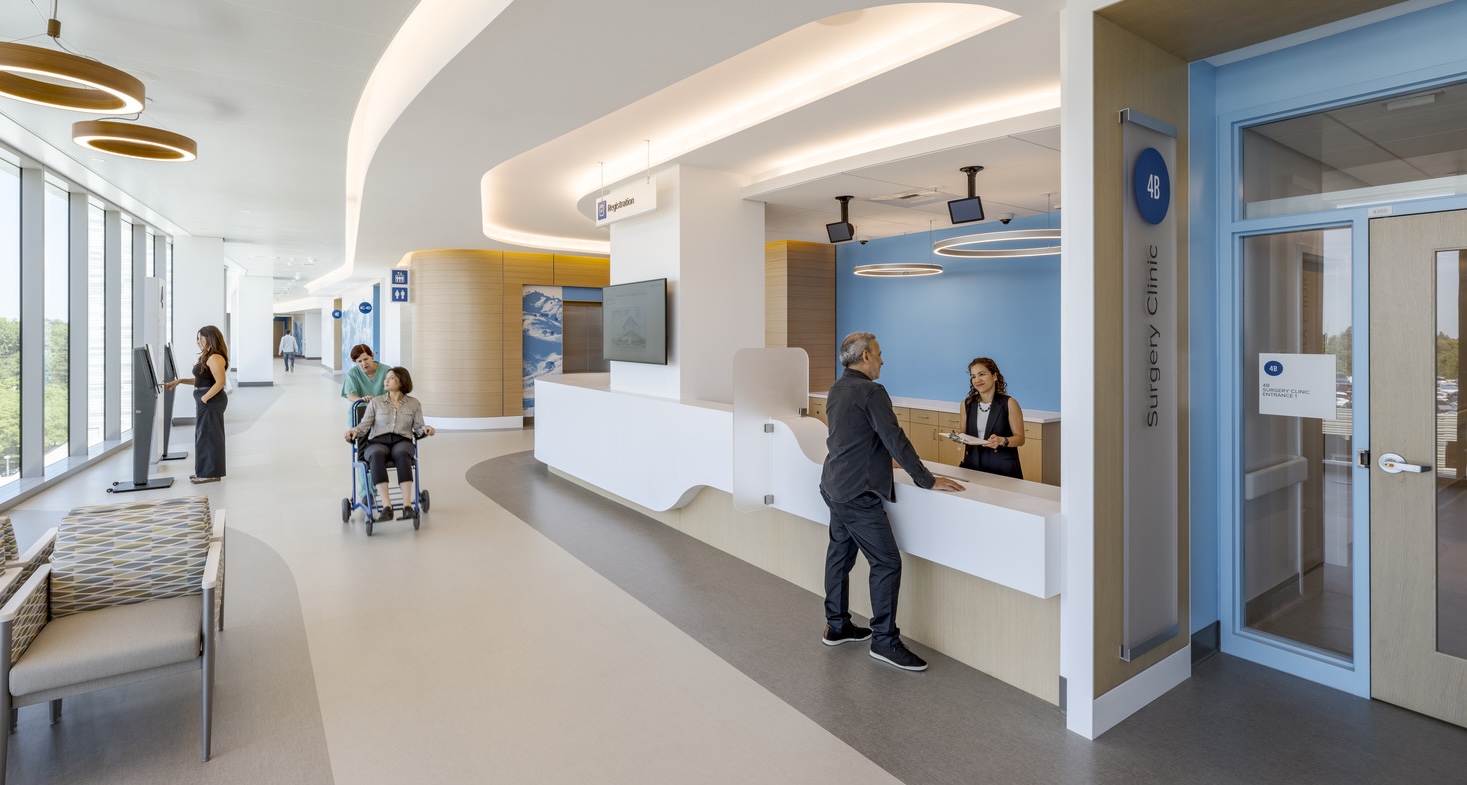
Healthcare facilities have to balance two priorities that can sometimes seem at odds: keeping people safe and making it easy for them to receive care. Patients need to reach the right department, visitors need to navigate unfamiliar spaces, and clinical staff need to move efficiently between areas. At the same time, healthcare organizations must protect people, medications, equipment, and sensitive spaces from security threats.
The challenge is making security work without creating unnecessary barriers to care. A controlled entrance may prevent unauthorized access but also affect patient flow. A weapons screening checkpoint may address a specific risk but cause congestion if the space cannot accommodate the process. These challenges become harder to resolve once construction documents are complete or the facility is already operating.
Security by design means considering security alongside architecture, clinical workflows, infrastructure, and technology from the earliest stages of a project. For healthcare owners, this approach creates an opportunity to address vulnerabilities before they become expensive design changes or operational problems.
Every healthcare facility has a different security profile. A hospital with a busy emergency department faces different challenges than an outpatient clinic or specialty care facility. Even within a hospital, the security requirements of a public lobby differ significantly from those of a pharmacy, behavioral health unit, operating room, or infant-care area.
Developing an effective security strategy starts with understanding how the facility will operate. Who will enter the building, where do they need to go, and how will people move through the space? Which areas require restricted access? What vulnerabilities exist, and what would be the consequences of a security incident in each area?
These questions help owners and design teams establish security requirements based on actual risks and operational needs rather than selecting technologies first and determining where they fit later. A risk assessment can inform decisions about access control, video surveillance, intrusion detection, and other measures, helping the project team prioritize investments where they will have the greatest impact.
The building’s physical layout is part of that strategy. Entrance locations, corridors, doors, elevators, and circulation routes influence how security systems function and how people interact with them. Addressing these elements early gives the design team more options and reduces the likelihood of having to relocate equipment, modify architectural plans, or compromise the intended security approach later.
Security measures are only effective if they work within the environment they are intended to protect. In healthcare, that means accounting for the different needs of patients, visitors, staff, and emergency responders. Patients and visitors need accessible, intuitive routes through the building, while clinicians need efficient access to clinical spaces. Emergency responders may need immediate entry to specific areas, even when normal access controls are in place.
Consider a controlled doorway between a public corridor and a clinical department. Preventing unauthorized entry is important, but the design must also account for staff movement, patient transport, emergency access, and life-safety requirements. Door hardware, access control, electrical systems, and fire alarm interfaces all influence how that doorway operates.
When these requirements are coordinated early, the project team can develop a solution that supports both security and clinical operations. When security is introduced late, the team may find that equipment locations, cable pathways, or circulation space have already been committed to other uses. Resolving those conflicts can lead to redesign, requests for information (RFIs), schedule impacts, and additional costs. Early coordination helps owners avoid those disruptions while giving the design team more flexibility to find the right solution.
Weapons detection is one example of why security needs to be considered as part of the broader facility design. For healthcare organizations evaluating screening, the first question should be what risk they are trying to address, not which technology to purchase. Threat history, patient and visitor populations, entry volumes, staffing, and security policies all influence whether screening is appropriate and where it should occur.
The design must account for the screening process as well as the equipment. Depending on the approach, an entrance may need space for queuing, accessible passage, patient transport, secondary screening, and security personnel. Power, network connectivity, cameras, and communications must also be coordinated. Without adequate planning, screening can create bottlenecks at entrances or interfere with the movement of people who need timely access to care.
Another important consideration is what happens when the system identifies a potential threat. The facility needs a defined response, including who evaluates the alert, where secondary screening takes place, and how security personnel communicate. The design must provide the space and infrastructure to support that response without unnecessarily disrupting nearby clinical operations.
Weapons detection should therefore be treated as one layer of a broader security strategy, not a standalone installation. By coordinating the technology, physical environment, staffing requirements, and response procedures, owners can make more informed decisions about how screening fits into the facility’s operations.
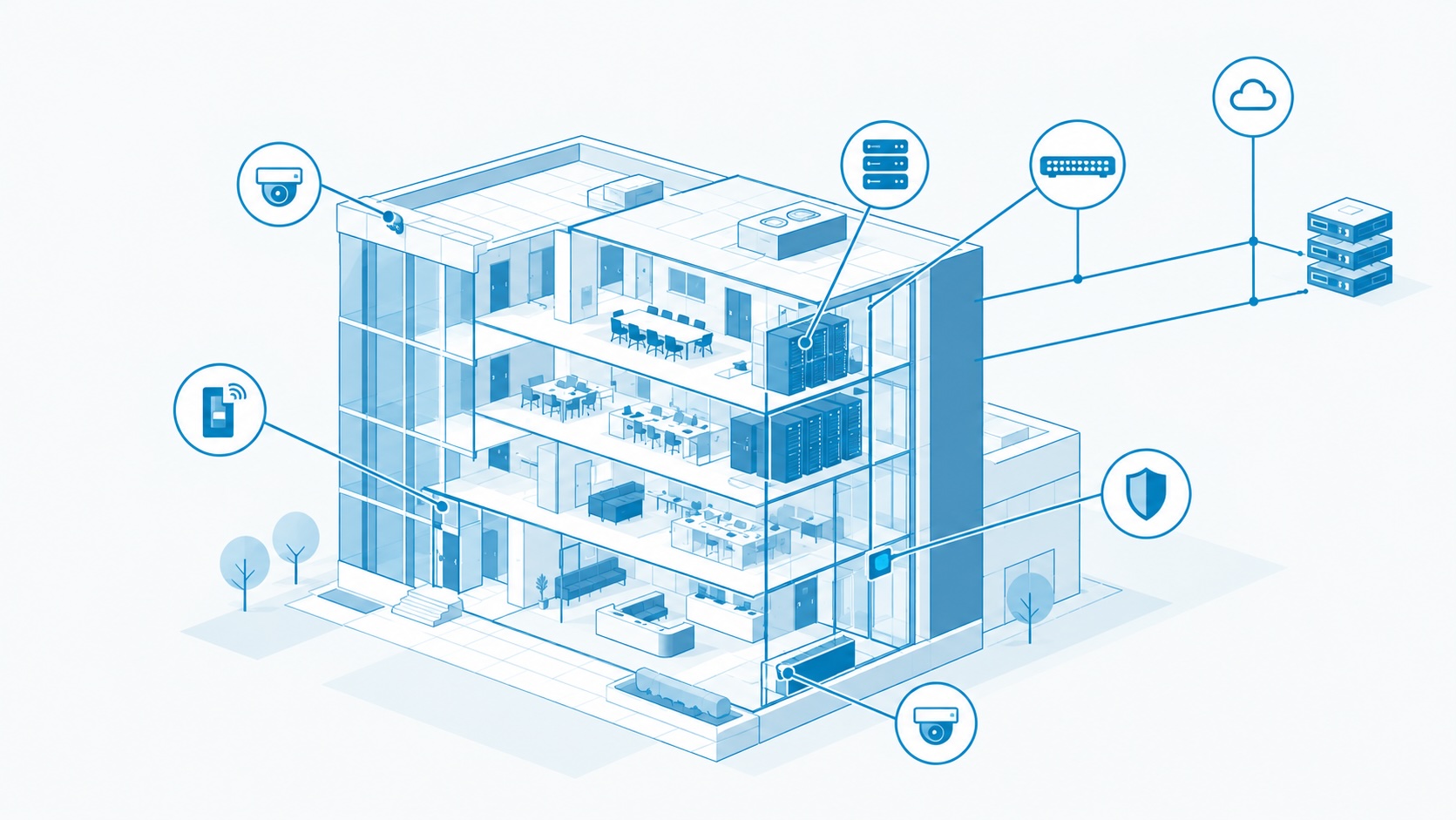
Healthcare security systems rarely operate independently. Access control, video surveillance, intrusion detection, communications, networks, elevators, power, and fire alarm systems may all interact. How those systems work together can affect both security and the facility’s ability to respond to an emergency.
For example, a fire alarm activation may require certain controlled doors to change state. A network or power failure may affect connected security devices. An incident captured by a camera may require coordination between video surveillance, access control, and communications systems. These interactions need to be addressed during design and verified through coordination and testing, rather than discovered during commissioning or after occupancy.
For owners, this integration matters because a collection of individually functioning systems does not automatically create a coordinated security environment. The project team needs to understand how systems will communicate, how they should respond to different conditions, and what happens when a component fails. Security design must support the facility’s operational and life-safety requirements under both normal and emergency conditions.
TEECOM’s integrated technology design approach brings security together with the building systems it depends on. Coordinating these interfaces across disciplines helps identify conflicts earlier and gives owners a clearer understanding of how the complete system will operate.
Healthcare facilities may remain in operation for decades, while security technologies and operational requirements can change much sooner. A system that meets an organization’s needs today may need to be expanded, replaced, or integrated with new technology several years after the facility opens. Planning for those changes during initial design can help avoid disruptive and expensive retrofits.
Practical decisions include providing adequate cable pathway capacity, equipment room space, power, network connectivity, rack space, and accessible infrastructure. These provisions give owners more options when upgrading or expanding systems, particularly when work must take place in an occupied healthcare environment.
Future flexibility does not mean installing every possible technology on day one. It means understanding that the facility’s security needs will evolve and making reasonable provisions for change. For owners, that can translate into fewer physical constraints during upgrades, less disruption to clinical operations, and a more adaptable building over its useful life.
Effective healthcare security depends on more than selecting the right equipment. It requires understanding the facility’s risks, how people use the space, how security systems interact with other building technologies, and how the environment will need to adapt over time. Decisions made early can influence patient flow, operational efficiency, project cost, and the ease of maintaining and upgrading systems throughout the facility’s life.
TEECOM’s security consultants work with healthcare owners, architects, and other engineering disciplines to translate security requirements into coordinated technology designs. By addressing risk, infrastructure, system interfaces, and operational needs early, the project team can develop solutions that protect people and sensitive areas while supporting the facility’s primary mission: delivering care.
Security is most effective when it is designed into the way a healthcare facility operates, not added after the building has already been designed.
TEECOM supports healthcare organizations in designing technology infrastructure that enables safe, efficient, and flexible care environments. We collaborate early with project teams to integrate acoustics, audiovisual, ICT/telecom, network, security, and wireless systems that support clinical workflows and patient experience. Our coordinated approach helps healthcare facilities balance reliability, compliance, and adaptability as care models evolve. Contact us to learn more about how TEECOM can assist in your next healthcare project.
Scott Berlin is a Principal, Senior Consultant at TEECOM, where he provides security design and consulting services for healthcare environments. With more than 30 years of experience across healthcare, aviation, government, and workplace projects, Scott brings a broad perspective to security planning and design. His experience as both an integrator and consultant helps him understand the needs of different project stakeholders and develop practical, innovative security solutions that balance performance, risk, and budget.
उद्योग के रुझानों, थॉट लीडरशिप, कर्मचारियों की कहानियों और विशेषज्ञ अंतर्दृष्टि पर हमारे नवीनतम ब्लॉग पोस्ट के साथ सबसे आगे रहें।