Beyond 100 Meters: When Extended-Reach Copper Makes Sense
Extended-reach copper can help solve connectivity challenges beyond 100 meters. Explore the benefits, tradeoffs and options...
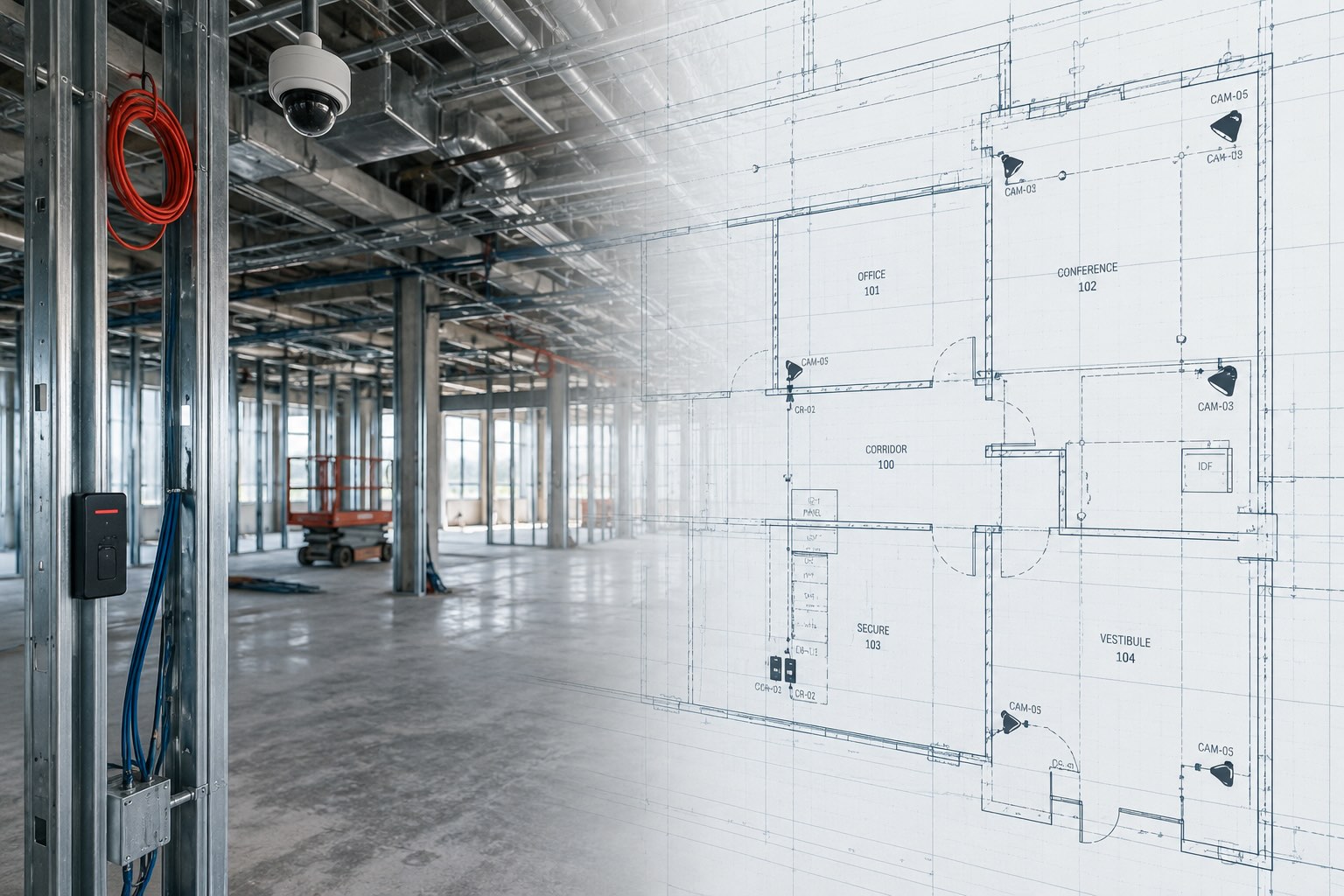
A security system can look perfectly sound on a set of drawings and still run into problems once installation begins.
Maybe a card reader is shown on a wall that turns out to be glass. A camera has the right coverage on the floor plan, but a ceiling obstruction blocks the view. A motion sensor is positioned near an HVAC vent or a bank of windows where changing light conditions could affect performance.
These are the kinds of details that field experience can bring to the design conversation.
That does not mean every security engineer needs an installation background. Engineering requires a range of technical knowledge, project experience and perspectives. The value of having people with field experience on a team is that they bring a firsthand understanding of what happens after the drawings are complete. When that knowledge is combined with engineering expertise and input from other disciplines, it can help the entire team make better decisions.
Drawings cannot show everything an installer will encounter on a job site.
People with installation experience naturally think about details such as access to equipment, available working space, wall construction, above-ceiling congestion, cable pull distances and bend radiuses. They know that a device may be easy to draw in a particular location but difficult, or even unsafe, to install there.
That perspective can complement the work of engineers who are focused on system requirements, performance, standards and overall project coordination.
The same applies to long-term serviceability. A panel needs more than enough space for the equipment shown in the initial design. It needs clear labeling, logical cable entry and room for future expansion. Cable pathways need to work in the real building, not just on paper. Device locations need to account for architectural features and other trades. Equipment needs to remain accessible after construction.
Bringing these considerations into the design conversation early gives the team another opportunity to test the design against real-world conditions.
One of the benefits of a team with varied backgrounds is that people notice different things.
Someone with years of installation and service experience may remember the questions clients regularly ask after a system is operational: Why wasn’t this door secured? Could we have covered this area with another camera? Why can’t the system do this?
Those experiences can help inform the questions asked during design.
At the same time, field experience is only one piece of the process. Engineers bring their own expertise in system architecture, technology, standards, codes, documentation and coordination. Other project team members contribute knowledge of architecture, electrical systems, IT, operations, scheduling, budgeting and other building systems. Together, these different areas of expertise help the team balance technical requirements with constructability, cost and schedule to deliver better outcomes for the client.
The strongest designs come from bringing those perspectives together rather than expecting one person to have every answer.
Field experience can also provide a useful check on equipment selections. Security systems involve more than choosing products that appear compatible in a manufacturer’s catalog. Understanding what actually comes with the equipment, what requires additional components and how devices are installed can help the team identify potential issues before materials are ordered.
Environmental conditions matter, too. Temperature, lighting, vibration, seismic requirements, mounting surfaces and available pathways can all affect how equipment performs and how it needs to be installed.
Security systems rarely exist in isolation. Access control, video surveillance and other technologies have to coordinate with architectural, electrical, IT, mechanical and other building systems.
This is where different areas of experience can be particularly valuable.
Door hardware is a good example. Access-controlled doors often involve several trades, and assumptions about power requirements can lead to duplicate equipment being purchased or installed. A hardware specification may call for a dedicated power supply even when the centralized access control system can support the load.
Someone familiar with installation may recognize the potential conflict based on previous projects. The engineer can then work with the project team to verify the equipment requirements, clarify responsibilities and make sure the final design reflects the system.
Resolving the issue during coordination is much easier than sorting it out after materials have been purchased and installation is underway.
The same principle applies to system integrations. Owners may expect a security system to communicate with IT, fire alarm or building automation systems without realizing that additional equipment, programming or coordination may be required.
Getting those conversations started early gives the team time to define what is included and address gaps before they affect construction.
Field experience is valuable because it adds another perspective to the design process, not because it is a requirement for good engineering.
Some of the strongest project teams are made up of people with different backgrounds and areas of expertise. An engineer may bring deep technical knowledge and design experience. A field-experienced team member may bring practical insight into installation and service. Another team member may have a strong understanding of IT infrastructure, project delivery or a particular building type.
Each perspective fills in part of the picture.
For security engineers who have worked in the field, that experience can be shared through design reviews, coordination meetings and informal conversations about what has worked on previous projects. For engineers without that background, working closely with field-experienced colleagues provides another source of practical insight.
That collaboration can also create opportunities for knowledge to move in both directions. Field technicians interested in design can learn more about the reasoning behind system architecture and specifications, while engineers can gain a better understanding of installation challenges and lessons learned from completed projects.
Mentorship, technical training and opportunities to participate in design reviews can help strengthen those connections.
Good security design requires more than getting the technology right. The system needs to work within the building, coordinate with other systems, meet the owner’s needs and remain practical to install and maintain.
Field experience can help the team see those requirements from the installation side. Engineering expertise provides another critical perspective. Together with input from contractors, architects, IT teams, owners and other stakeholders, those perspectives create a more complete picture of what a successful system needs to accomplish.
The goal is not to have every person on the team know how to install every device.
It is to build teams where people bring different experiences to the table, ask questions, share what they know and use that collective knowledge to make the project better.
That is where field experience provides its greatest value: not as a replacement for engineering expertise, but as another perspective that strengthens it.
TEECOM supports the design of integrated security systems that enhance safety, awareness, and operational control. We coordinate with project teams to align security technologies with architectural, operational, and user requirements. Our early engagement helps ensure systems are effective, scalable, and seamlessly integrated into the built environment. Contact us to learn more about how TEECOM can assist with security systems in your next project.
Lauren Dew is a security and technology designer at TEECOM with more than 13 years of experience spanning hands-on fieldwork, project management and consulting. Her field and design experience gives her a practical approach to developing security systems that are constructible, reliable and aligned with client needs. Lauren has supported projects across healthcare, higher education, corporate, manufacturing, correctional, and K-12 environments.
उद्योग के रुझानों, थॉट लीडरशिप, कर्मचारियों की कहानियों और विशेषज्ञ अंतर्दृष्टि पर हमारे नवीनतम ब्लॉग पोस्ट के साथ सबसे आगे रहें।