What Field Experience Brings to Security System Design
Field experience adds practical insight to security design, helping improve constructability, coordination and maintenance...
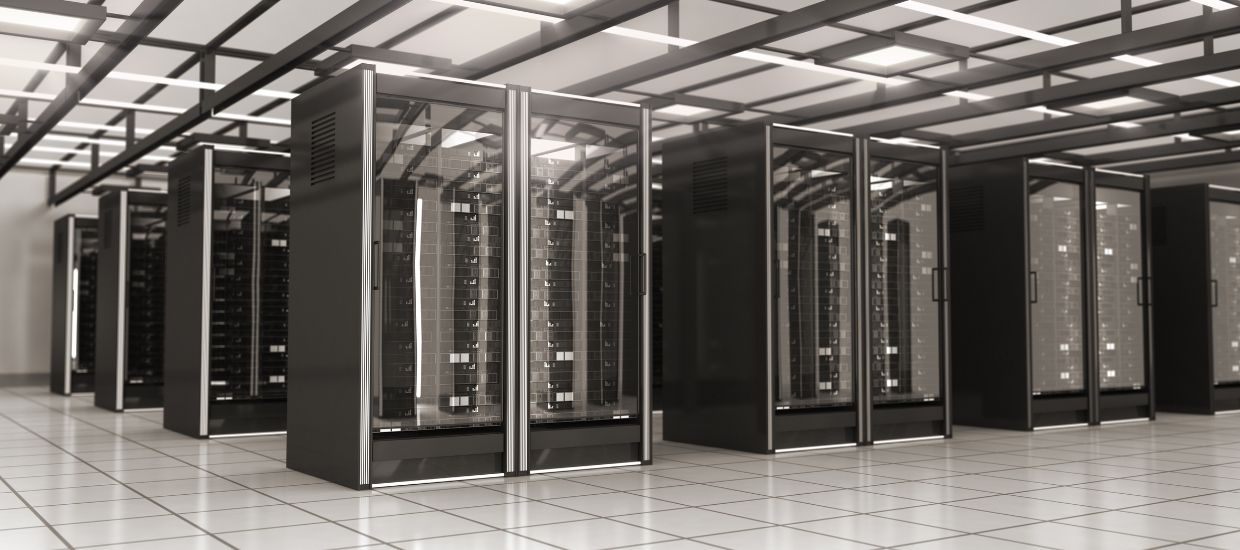
In the data center industry, time to market has become the defining metric for success. Clients demand speed, quality, and reliability. Every day of delay represents lost opportunity, making the ability to move faster without compromising design accuracy a real competitive edge. At TEECOM, we use automation, scripting, and templated workflows to help clients shorten project timelines, identify early procurement opportunities, and deploy infrastructure at scale.
Data center clients, especially hyperscalers and AI platform providers, are building rapidly across multiple sites and regions. Time saved in design translates directly into accelerated capacity and earlier revenue generation.
Traditional design workflows are not built for this pace and manual modeling of equipment, cabling, and schedules takes time. Rework is common and procurement is often delayed until after the contractor is on board, often slowing projects down.
TEECOM’s automated design workflows use custom scripting, parametric modeling, and instruction-based processes to reduce manual effort and improve consistency. Instead of modeling thousands of cabinets and cable routes by hand, we use tools like Python and Dynamo to automate placement based on defined rules.
For example, we can input a single cabinet family and apply it across a model using a structured instruction set. Cable routes can be generated automatically based on endpoints, slack factors, conveyance heights, and directional turns. These same instructions generate accurate cable lengths and bills of materials early in the design process. This means clients can begin manufacturing and procurement while the rest of the project is still in design.
Long-lead items like fiber trunks can delay construction if they are not ordered early. With automated workflows, we can provide clients with detailed and accurate quantities early enough to support pre-manufacturing or pre-purchasing. In many cases, this happens before a contractor is even selected. This also provides clients buying power by giving them the ability to order multiple sites at once and obtain pipeline guarantees from the manufacturers.
By the time a contractor is on site, critical materials are already being delivered. This approach avoids the typical lag between contract award and material procurement and cuts weeks or months off the delivery schedule.
Speed also comes from repeatability. Many clients deploy the same building type across multiple sites. When the internal layout, systems, and orientation remain consistent, the design can be templated and reused.
We work with clients to build reusable templates for infrastructure like cabling, back-of-house connectivity, and conveyance systems. These templates become standard packages that can be applied to new sites with minimal adjustments. Some clients are already operating with standardized building types, which allows us to roll out templates at a programmatic level.
In addition to templating, projects can be broken out into modular design packages that can be developed in parallel. Site infrastructure comes first, followed by pathways, then core connectivity and production network designs. This sequencing allows us to move quickly and efficiently through the critical design elements and enables early turn-up of systems while other packages are still underway.
Automating design does not mean sacrificing quality, it can actually improve accuracy. Instruction-based workflows provide a single source of truth for equipment placement, cable routing, and BOMs. The code does not get tired, overlook details, or make inconsistent decisions across drawings and spreadsheets.
Automation is not fool-proof and human oversight remains essential. TEECOM engineers validate assumptions, review outputs, and conduct QA/QC at each stage. This is especially important when working across diverse site conditions. Templates must be adapted for local realities. Snow loads, seismic regions, and building codes vary by location, and those factors must be evaluated and integrated into the design.
As with any approach, there are risks to manage. Over reliance on templates can introduce systemic issues if an error goes undetected. An incorrect assumption baked into a template can affect multiple sites before it is caught. Clients must also be aware that every site has unique constraints, and a one-size-fits-all model can only go so far.
We mitigate these risks through careful validation, clear documentation, and structured review. We also engage clients early and often to ensure alignment between design intent and site-specific requirements.
The future of data center delivery is increasingly model-based. Construction teams are beginning to rely on detailed digital models rather than traditional drawing sets. These models include equipment layouts, part numbers, cable lengths, and installation information in one coordinated source. This approach allows contractors and manufacturers to access the data they need directly, reducing the need to manage multiple disconnected documents.
Hyperscaler clients are already pushing in this direction. Their level of modeling during design exceeds what many other industries rely on. As a result, they are well positioned to be first movers in fully model-driven delivery.
In a market that demands both speed and precision, automated design is more than a technical capability. It is a strategic lever. TEECOM’s approach combines the efficiency of machine-generated outputs with the judgment of experienced engineers to deliver faster, more consistent results across complex, large-scale projects.
We are helping our clients unlock time savings, accelerate procurement, reduce rework, and scale more effectively across global portfolios. As the pace of delivery continues to increase, our clients can be confident that they are building smarter, not just faster.
Our mission critical team incorporates the latest technology trends, lifecycle expenses, and operational profitability as we drive designs forward. From site-specific requirements to understanding complex codes and regulations, we have you covered. To learn more about how our mission critical technology experts can support your project goals and objectives, contact us today.
Sunny Chamadia is a Principal Consultant at TEECOM with more than 16 years of experience designing complex technology systems across sectors including hyperscale data centers, healthcare and higher education. He leads multi‑discipline projects where ICT/telecom, cabling infrastructure and design coordination intersect with architecture, MEP and structural teams. Sunny is known for bringing rigorous technical insight together with practical constructability thinking to deliver scalable, repeatable solutions for clients operating at global scale.
Stay ahead of the curve with our latest blog posts on industry trends, thought leadership, employee stories, and expert insights.