Beyond 100 Meters: When Extended-Reach Copper Makes Sense
Extended-reach copper can help solve connectivity challenges beyond 100 meters. Explore the benefits, tradeoffs and options...
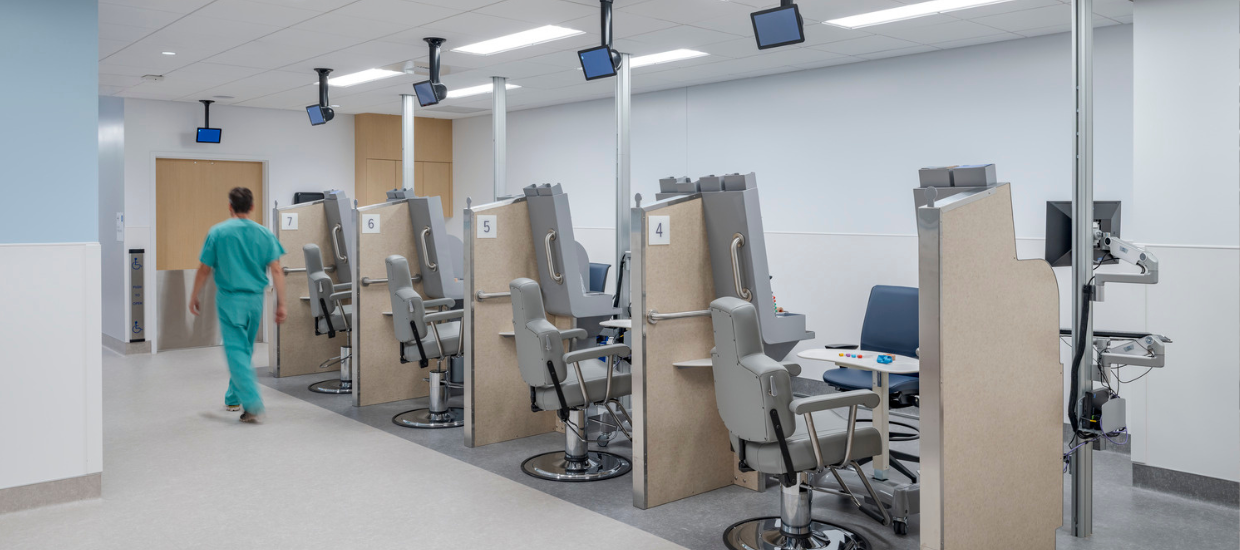
Acoustic design and performance in healthcare facilities sits at the intersection of patient recovery and the reliable delivery of care. Its impact is not defined solely by codes, criteria, or best practices, but by lived experience, how it feels to recover in a patient room, work through long and demanding shifts, or support a loved one through moments of uncertainty.
The acoustic environment is present at every stage of care, shaping rest, communication, stress, and trust in ways that often go unnoticed until they have a direct and most commonly negative impact. When acoustics are treated as a clinical input rather than a background performance metric, healthcare environments become more supportive and more effective for everyone who uses them.
Effective acoustic design for healthcare facilities begins with understanding how existing facilities actually perform in use. Benchmarking healthcare environments that stakeholders identify as successful, as well as those known to struggle acoustically, provides critical insight into how sound is experienced by patients, staff, and families. This process helps teams distinguish between spaces that technically comply with standards and those that genuinely support recovery, focus, privacy, and care delivery.
Benchmarking establishes a shared point of reference early in the project. It grounds acoustic goals in lived experience, aligns stakeholder expectations, and clarifies where change is needed to improve performance. When used intentionally, it becomes a powerful tool for decision making, risk reduction, and change management.
Once expectations are calibrated through benchmarking, evidence-based standards provide the structure needed to translate experience into design criteria. Acoustic considerations in healthcare are driven by human perception and supported by decades of research linking sound to stress, communication, privacy, and overall care experience.
Unlike many technical performance metrics, healthcare acoustics must address both measurable outcomes and subjective response, which adds complexity to how standards are written, interpreted, integrated, and verified. Several core guidelines shape acoustic performance expectations in healthcare facilities:
When benchmarking and best practice guidelines are applied together, the regulatory framework becomes less of a constraint and more of a mechanism for delivering healthcare environments that perform reliably in real-world use.
Patients, hospital staff, and loved ones experience healthcare environments together. Poor acoustics disrupts sleep, elevates stress, interferes with communication, affects recovery rate, and the overall care delivery.
Early engagement allows acoustic performance to be shaped through fundamental design decisions rather than mitigated through add-on measures. Late-stage or corrective solutions are typically more costly, less coordinated, and more likely to compromise other design, aesthetic, or operational priorities.
Key acoustic drivers that can define success early include:
Hospitals are intentionally located close to the communities they serve. As a result, noise and vibration can both enter the facility and be generated by it. These external and internal conditions establish the first acoustic constraints on a project. When understood early, they create opportunities for mitigation to be integrated into site planning and base building design, where solutions are more effective and less costly than late-stage redesigns that affect schedule, hospital delivery, or, in the worst case, require post-occupancy remediation.
Many acoustic outcomes are determined before detailed design begins. Integrating acoustics into early planning allows blocking and adjacency diagrams to identify noise and vibration-sensitive spaces and intentionally separate them from known sources of impact. These exercises help teams test layouts, evaluate stacking strategies, and avoid high-risk adjacencies before they become embedded in the building footprint.
When separation is not feasible, early planning allows teams to clearly identify where sound and vibration isolating construction needs to be integrated. Flagging these conditions early informs budgeting, supports accurate cost estimating, and reduces the likelihood of late-stage surprises when acoustic requirements intersect with coordinated architectural, structural, MEP, and technology systems.
Design intent alone does not guarantee acoustic performance in the finished facility. Construction substitutions, detailing decisions, coordination changes, and equipment selections can all affect how noise and vibration behave in completed spaces. This gap between intent and outcome is a primary reason acoustic issues persist even on what are perceived to be well-planned projects.
Benchmarking and verification close that gap. Benchmarking facilities that stakeholders identify as successful or problematic helps define acoustic goals grounded in lived experience. Verification confirms whether those goals are achieved in the completed facility and establishes accountability across the project team, particularly in integrated delivery models.
As design-build and public-private partnership (P3) delivery becomes more common, acoustic commissioning and performance verification are increasingly critical. Field testing at project closeout confirms that performance targets established during design and informed by benchmarking are realized in practice, even when changes occur during construction.
Together, benchmarking and verification shift acoustics from a perceived risk or cost driver to a measurable indicator of care quality. Performance can be evaluated and validated based on how spaces support recovery, communication, staff effectiveness, and family experience.
As healthcare delivery evolves, so do acoustic needs. Telehealth and flexible care models have increased demands for sound isolation and room acoustic performance to support speech privacy and intelligibility. At the same time, growing attention to staff sustainability, patient acuity, and community impact has elevated the role of sound in both interior environments and site planning. The integration of WELL and LEED standards reflects a broader commitment to health, well-being, and long-term sustainable building performance.
By blending research, regulatory understanding, benchmarking, and verification, TEECOM helps healthcare teams deliver environments where sound supports care and serves as a reliable measure of design performance.
TEECOM is a leader in providing innovative acoustics solutions across a wide variety of project types. With a strong focus on collaboration, TEECOM partners with stakeholders through all project phases to deliver high-quality, tailored acoustic designs that enhance user experience and functionality.
We offer comprehensive acoustics consulting services for conversions of all types. Our team conducts thorough acoustical assessments and develops customized solutions that meet the specific requirements of residential and lab environments. Whether it’s enhancing privacy in a residential conversion or controlling noise in a lab setting, we provide the expertise and solutions to ensure successful project outcomes.
For more information on our services and how we can support your project, contact us today.
Robby Deem is a Principal, Senior Consultant at TEECOM, responsible for leading the acoustics design team and overseeing multidisciplinary projects across a wide range of sectors, including higher education, arts & culture, workplace, healthcare, and science & technology. With more than 12 years of experience in acoustic consulting, Robby brings an extensive background in architectural engineering, performance-based design, and delivering technical excellence. His approach prioritizes collaboration and effective communication, consistently integrating sustainability, health, and well-being features into every project.
Stay ahead of the curve with our latest blog posts on industry trends, thought leadership, employee stories, and expert insights.