
Beyond 100 Meters: When Extended-Reach Copper Makes Sense
Extended-reach copper can help solve connectivity challenges beyond 100 meters. Explore the benefits, tradeoffs and options...
In complex environments, the assumption that a simple, standard, off-the-shelf product will solve a deeply specific operational problem is one of the most common misconceptions we see. On paper, it sounds simple and efficient while in practice, it can create gaps between expectation and reality that only surface after deployment, when changes are expensive and disruptive to business operations.
A Proof of Concept (PoC) offers a way to close that gap early. It allows teams to validate whether a proposed solution actually works in their environment and what adjustments need to be made to their systems before committing to full-scale investment. PoCs serve as a disciplined method to turn assumptions into functional outcomes and theoretical capabilities into operational truth.
Clients frequently begin with the idea that a standardized product should solve their specific problems. The reality is that most mission critical and enterprise environments are anything but standard. These are often layered ecosystems of legacy systems, with unique security requirements, customized integrations, and demands that vary from facility to facility.
A PoC, in TEECOM terms, starts with developing detailed requirements based on user input and identifying goals which document key performance indicators (KPI) required for the project to move forward. This PoC process is limited in scope, budget and schedule to ensure efforts are being expended on the correct solution before being expanded to a larger pilot project. It is not a pilot in production, but a structured experiment designed to validate functionality, integration, schedule and value before committing resources at scale.
One of the most important outcomes of a well-executed PoC is financial clarity. Many operational challenges are initially solved with labor. For example, a staffed security guard controlling vehicle access is flexible, familiar, and relatively easy to deploy. But it is also a recurring operational expense (OpEx), subject to staffing variability, wage pressure, and availability risks.
Technology introduces the opportunity to convert that recurring cost into a capital expense (CapEx). An automated access control system, once validated and deployed, represents a fixed investment that can be amortized over time while delivering consistent performance.
The value is not just financial, it is operational resilience allowing human personnel to focus on higher-order decision making rather than repetitive manual tasks. In many cases, this shift becomes a force multiplier. Teams are no longer managing constant variability in staffing or manual processes. Instead, they are leveraging systems that extend their capability and improve predictability.
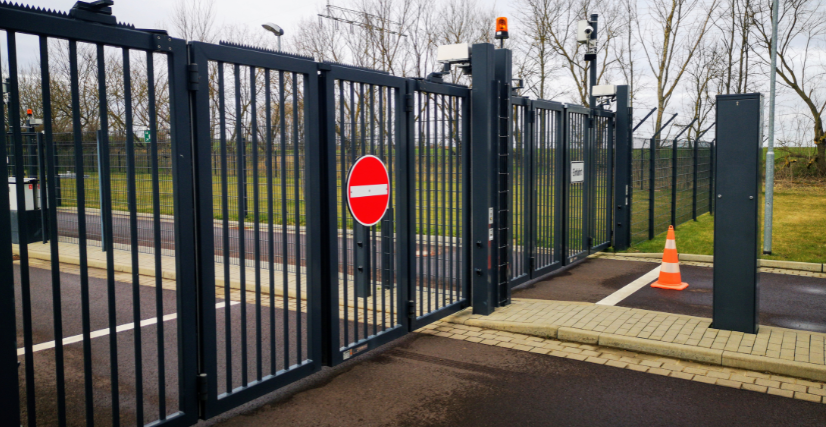
In one PoC, we evaluated how an autonomous vehicle interacts with site infrastructure to trigger secure gate access. While the concept appears straightforward, the execution revealed several missing layers of complexity and the owner’s unique requirements.
We tested how vehicles identify themselves, how credentials are exchanged, and how systems respond under different conditions such as latency, network interruptions, and overlapping access requests.
While the PoC did not result in deployment, it was still a successful outcome. By identifying the limitations of available technologies early, the client avoided investing in a solution that could not meet operational requirements. The result was a more informed decision and a clearer understanding of what future capabilities would be necessary.
We conducted a PoC across multiple office buildings to evaluate occupancy sensor technologies. The goal was to determine whether physical space was being used efficiently and how accurately different sensor systems could reflect real occupancy patterns.
By deploying multiple sensor types in parallel, we were able to compare data fidelity, calibration needs, and integration complexity. The result was not just a recommendation of a single product, but a clearer understanding of how space utilization data would actually inform workplace strategy.
In a regulated biotech environment, system migrations carry significant risk. In one PoC, we constructed a “test wall” to validate new security software, Bluetooth readers, and cyber hardening protocols before introducing them into live manufacturing labs.
This controlled environment allowed the team to simulate real-world access scenarios, test failure modes, and validate compliance requirements without disrupting production. It also surfaced interoperability issues between legacy systems and new cybersecurity frameworks that would have been difficult to detect in a purely theoretical design phase.
Not every PoC leads to implementation. That is not a failure. Oftentimes, the most valuable outcome is the decision not to proceed. A PoC provides the data needed to determine whether a solution truly delivers meaningful cost savings, operational improvement, or user experience gains.
It also limits exposure by discovering flaws early when adjustments are still inexpensive and manageable rather than after a full deployment. This approach significantly reduces the risk associated with large capital decisions and ensures that investment is directed toward solutions that are proven to work in context.
A PoC is most effective when it is grounded in alignment, not just technology. That means bringing together stakeholders from operations, IT, security, facilities, and end users early in the process. Each group defines success differently, and those expectations need to be understood, documented, and aligned with clear KPIs before testing begins.
We work with clients to define clear objectives, budget parameters, functional requirements, schedules and support considerations. Without that shared foundation, even a successful technical test may not translate into adoption at scale.
In practice, a PoC helps replace assumptions with real-world evidence. It shifts decisions away from vendor claims and toward functional performance in the targeted environment. In complex, always-on systems, that early validation matters. The difference between a good idea and a workable solution is often found in how thoroughly the requirements are understood and realistic testing before deployment.
In complex environments, success depends on more than selecting the right technology. It requires validating that technology against real operational requirements, users, and constraints. A well-executed PoC provides that validation, helping organizations make informed decisions, reduce risk, and move forward with confidence.
TEECOM supports the design of integrated security systems that enhance safety, awareness, and operational control. We coordinate with project teams to align security technologies with architectural, operational, and user requirements. Our early engagement helps ensure systems are effective, scalable, and seamlessly integrated into the built environment. Contact us to learn more about how TEECOM can assist with security systems in your next project.
Jeff Smith is a Principal, Vice President at TEECOM and a subject matter expert in security systems with more than 40 years of experience designing, implementing, and supporting complex security environments. He brings a holistic, systems-level perspective to every engagement, focusing on delivering solutions that are not only technically sound, but also practical, resilient, and aligned with long-term operational needs. Jeff is known for his ability to guide clients through the full lifecycle of security systems, from strategic planning and budgeting to design, deployment, and ongoing support, ensuring systems are implemented correctly the first time.
Stay ahead of the curve with our latest blog posts on industry trends, thought leadership, employee stories, and expert insights.